‘Faith’ful Soto a 4-H Dairy chair
-
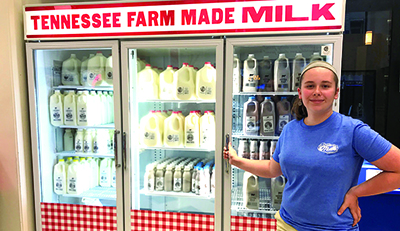
As June Dairy Month chair, Faith Soto’s mission was to support and educate the public about the local dairy industry during June, which was Dairy Month. - Photo Submitted
-
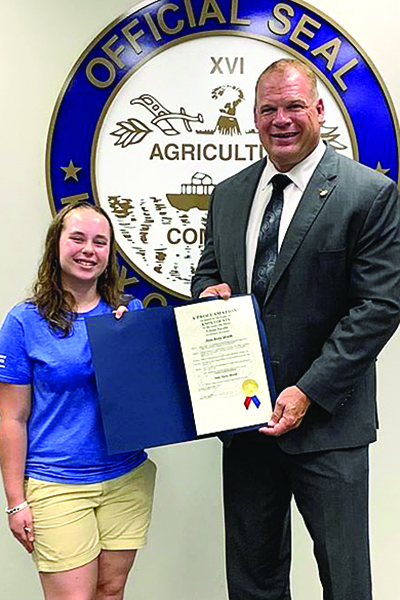
Soto is pictured with Knox County Mayor Glenn Jacobs, as she received a proclamation recognizing June as Dairy Month in the county. - Photo Submitted
Faith Soto, a 13-year-old active member of Farragut/Rocky Top 4-H Club, was named this year’s Knox County 4-H June Dairy chair.
A home-schooled student through Home Life Academy, she also is a 4-H Honor Club member, which is a state recognition, said Sarah Harrison-Brown, University of Tennessee-Knox County extension agent for 4-H Youth Development.
“There can only be one youth chairperson appointed in each county for the state of Tennessee,” Harrison-Brown added.
She said Soto was selected because of her involvement and contest participation in the Nutrition, Health &
Fitness Project, as well as a Dairy Project and Poultry Project.
“It feels pretty good,” Soto, daughter of Dorne and Heather Soto, said about being June dairy chair. “It’s been an incredible experience.”
For Soto, it has had special significance because her great-great grandparents had a dairy farm.
In her role as chair, “I can spread the word about dairy farming.”
As chair last month, Faith said she learned communication skills as she learned about the farmers’ challenges.
While researching dairy farming, her mission “was to promote dairy and advocate for dairy farmers for the entire month of June,” Harrison-Brown said.
“She has utilized several media outlets, visited local dairies, interviewed dairy farm/business managers, created a dairy exhibit, visited local grocery stores, passed out promotional dairy items for the public and much more,” she added about the 4-H’er.
“Her main goal for June was to advocate for struggling dairy farmers and to encourage consumers to purchase dairy products, especially during COVID-19.”
Soto said her role meant interviewing dairy farmers about their business.
In so doing, she learned “a lot of farms – 97 percent – are family owned, and 3,000 of them are out of business.
“We can support our local farmers by buying dairy products, asking how they are doing and spreading the word about dairy farming,” she added.
Soto, who is thinking of going into the veterinary field, recently accepted a proclamation from Knox County Mayor Glenn Jacobs, who recognized June as Dairy Month in Knox County.
“Faith has done exciting things and has worked hard in representing the dairy industry, UT-TSU Knox County Extension/4-H and our sponsor, The Dairy Alliance, in the best ways possible,” Harrison-Brown said.