Community
Cancer Awareness
October 21, 2026 by Story submitted by Tennova Healthcare
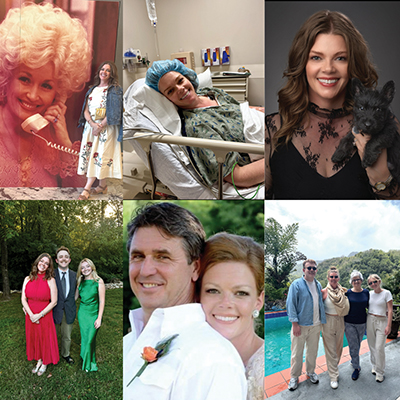
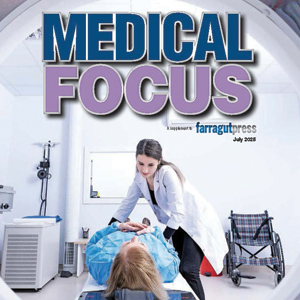
For breast cancer survivor Allison Giles, putting herself first and keeping her scheduled health appointments was not always a priority. Even with a family history of cancer, Giles put the needs of others first like many women do every day.
However, the risk of developing cancer has always weighed heavily on Giles. She scheduled a genetic test indicating she did not carry the BRCA gene, a marker that shows a significant lifetime risk for certain types of cancers.
“I began receiving regular mammograms in my early 40s because deep down I knew there was a risk with my family history,” Giles said. “Looking back, and what I would tell my friends and colleagues, is don’t miss these appointments.”
In August 2025, a routine mammogram detected hormone-positive cancer in her right breast. Determined to take an aggressive approach, she chose to undergo a bilateral total mastectomy the next month. Although a lumpectomy and radiation were recommended, Giles opted for the double mastectomy for peace of mind and long-term risk reduction.
During treatment, Giles faced several complications. In October that year, she developed cellulitis requiring an emergency visit at Tennova Newport Medical Center. Later in December, while taking the hormone-blocking medication, she developed a deep-vein thrombosis and pulmonary emboli. She was hospitalized again and treated with different medications. Giles said she continued diagnostic imaging over the past six months and remained under the close supervision of her oncology team.
Read More
October 21, 2026 by Staff reports
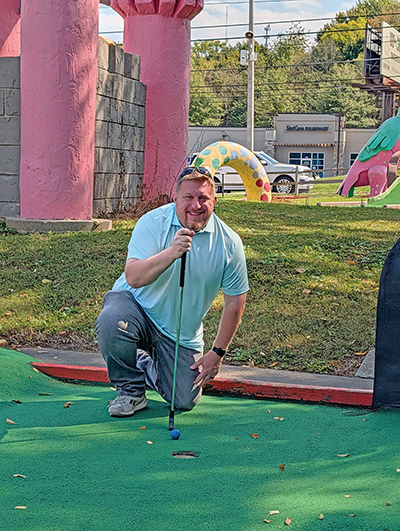
Rotary Club of Farragut invites the community to a play some mini golf and help feed the hungry with its Community Mini Golf & Food Drive from 10 a.m. to 2 p.m., Saturday, Oct. 24, at Sir Goony’s, 10925 Kingston Pike.
“Our idea is simple,” said Joey Ruffalo, RCF fundraising chairman. “Bring a can; play a round; make a difference.
“The mini golf will be free to the community with the donation of one nonperishable food item per person, per round,” Ruffalo said. “We’ll also have food vendors, family fun and an opportunity for people to learn more about Rotary and the work we do in our community.”
To make the event possible and raise funds for future Rotary service projects, “we’re inviting local businesses and community partners to become sponsors,” he said.
“Sponsorship opportunities currently include: Presenting Sponsor ($1,000), Community Sponsors ($500), Food Drive Sponsor ($500), Standard Hole Sponsors ($150) and Premium Hole Sponsors ($200).
Read More
October 21, 2026 by Tammy Cheek
Lions and leopards and crocodiles … oh my!
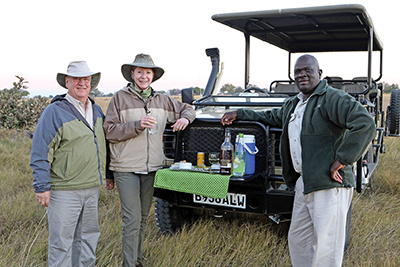
Nature photographer Steve Brandon of Chattanooga shared images of the swamp lions of Botswana with Rotary Club of Farragut members during their meeting in Fox Den Country Club Wednesday, Sept. 30.
“They call him the king of the jungle, but he’s not in the jungle,” he observed. “He’s in the savannah.”
Brandon “has photographed wildlife in all seven continents and has spoken to more than 125 nature groups, civic clubs and schools about wildlife and conservation,” president-elect John Rock said. “Steve and his wife, Patsy Fowlkes, are both Rotary Paul Harris Fellows.”
Brandon spoke to the club last year about a trip to Tanzania in Kenya to see the Great Migration.
In Botswana, Brandon got up close and personal with the lions to photograph the creatures.
“The thing, to me, is the eyes,” he said. “If you look at every one of these photographs, … those golden eyes.
“Actually, they’re pretty hard to see,” Brandon said about the lions, who use the savannah grasses as cover. He indicated one photograph and said, “There’s a great back story of him sneaking up on me.
“We were out of the truck and the ranger told us to get back in the truck fairly quickly, so we did,” Brandon recalled.
“Botswana is almost exactly the same size as Texas,” he said. “It’s a five-hour flight from [Lake Victoria] to Botswana.”
Read More
October 21, 2026 by Tammy Cheek
A local business is organizing a family-friendly concert to help those in need during the holidays.
Mark and Pamela Zastrow of Armor Gold Cables are spearheading Christmas with a Purpose to benefit Cold Hands Warm Hearts in Loudon County and are looking for sponsors.
The concert, featuring music artists Mark Mackay, Casey James and Morgan Myles will take place from 5:30 to 9:30 p.m., Saturday, Nov. 28, at The Venue at Lenoir City, 7690 Creekwood Park Blvd., Lenoir City.
“I’m excited,” said music artist Casey James, who was a Season 9 finalist on American Idol. “Anytime I get to play music, especially if it’s helping out, that’s a two-for-one for me.”
James also will be performing for a benefit concert 6 p.m., Sunday, Oct. 25, at Patriot Church in Lenoir City. Attendees are asked for a minimum $25 donation. The proceeds will go to Alliance Women’s Clinic.
Myles performed on The Voice, and Mackay is a touring country music artist in Nashville.
Early bird tickets for Christmas with a Purpose are $42.50 for general admission, before Saturday Oct. 31; free for children ages 12 and younger; $68.25 for preferred admission, which allows early access; and $104.25 for VIP tickets, which include early admission, VIP seating, meeting the artists and swag from the artists.
Along with the music, there also will be activities for children, such as photos with Santa, crafts, a hot chocolate station, cookie station and a coloring station.
Read More