
Shot clock, RPI coming to HS hoops
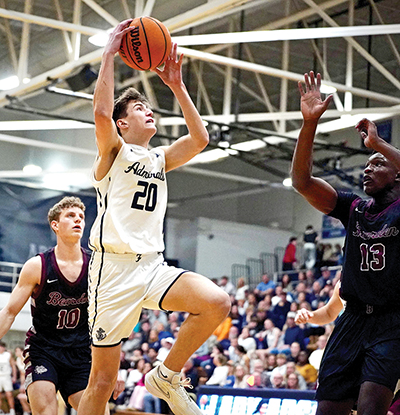
The shot clock usage will involve a multi-year rollout, as it will first be permitted for use in Hall of Champions games, holiday tournaments and summer competitions. Full implementation for the regular season and postseason is slated for the 2029-30 school year.
The move has drawn mixed reactions from coaches across the state, including local ones across the Farragut and west Knoxville area.
“I’m kind of indifferent on it,” Farragut boys coach J.P. Burris said. “I think there’s some positives, where you can’t just hold the ball, but I would be the first to admit we used the fact that there wasn’t a shot clock to keep us competitive in that Bearden region championship. We didn’t play stall ball, but we were adamant about running our offense to limit the possessions for a really great Bearden team.”
“I think it’s a good thing ultimately, but the full implementation has its challenges,” Farragut girls basketball coach Jason Mayfield said.
He and Burris noted it won’t change much for either team’s offense considering their current pacing, and Mayfield added the Lady Ads have played in out-of-state tournaments with shot clocks. So there are a few current players and coaches who would be accustomed to it if any adjustments are needed on defense especially.
“I’ve had some teams in the postseason that have basically held the ball, and I’ve even done it one time when we were in severe foul trouble,” Mayfield said. “It will stop that strategy for the most part, but it won’t change the fact that some teams will still want to play fast and some will want to work clock and slow things down.”
Burris, meanwhile, said the shot clock should only help his defense, since the Ads already stymied one team in a minute-long possession during a recent summer scrimmage.
“So you stop a team for 35 seconds, and it’s a turnover,” he said.
The biggest argument against the shot-clock implementation has been the expense for schools and someone experienced to run it correctly.
“It shouldn’t be complicated running it, but I could see some scenarios where it gives officials one more thing to have to juggle, especially at the end of games,” Mayfield said. “We put a lot on those guys already. The experienced ones won’t have a problem but it could be an adjustment with some others.”
Hardin Valley boys coach Andy Arendt agreed on the positive nature of the move, as did Bearden boys coach Jeremy Parrott.
“Basketball is meant to be played with pace and space, and it will help athletes prep for college and make the game better,” Arendt said. “I know there are concerns about staffing and money, but I think all that will get figured out. We played with it at a tournament in California, and with our pace, I don’t think it’ll affect us too much. Now on defense, we could see a lot of teams press full-court.”
Parrott noted his team likes the shot clock because of its effect on the pacing, too, adding that it will force “both players and coaches to be better at situational basketball.
“I never minded guys utilizing the clock for ball control late in games based on time and score,” he said. “It’s the teams that start holding the ball early in games to deliberately shorten them that wasn’t good. That is one big thing that will be right about its implementation. Programs and schools will adapt. It will have some hiccups at first and then level out I believe.”
Bearden girls coach Justin Underwood called the shot clock an “adjustment for everyone,” adding that most offenses already play within 35 seconds but that it will change late-game situations.
He called the financial aspect “a bigger unknown” because of the cost of another official or game worker but called the overall implementation “progress as far as the game goes.”
Notably, both Bearden programs are happy about the RPI implementation. The statistical formula ranks teams based on their win-loss record and strength of schedule, so it will bring a new format for the
Division I state tourney starting in the 2027-28 season. Under this model, the Bulldogs would likely have faced Bartlett in the state championship rather than the semifinals last year.
“Don’t mind seeing the seeding process for the final eight come to fruition,” Parrott said. “My only concern is what system they use to do it. It has to come from a third party, like MaxPreps or a fair metrics system. Media cannot be allowed to rank teams for this purpose. We’ve seen too much local bias with that in the past.”
Parrott went on to reference one media outlet in Knoxville that had his team ranked in a final poll below two teams the Dawgs had beaten that season, reinforcing the importance of where these RPI metrics and rankings are sourced once the system is in place.
“Yes, if rankings were a thing, we would have likely played Bartlett in the state title game,” he said. “Would have been cool for our kids.“
Underwood, meanwhile, said he tries to compete against elite competition, so he hopes this format will “reward teams from their season scheduling rather than leave it up to chance.”